Few procurement decisions reveal more about a buyer's engineering sophistication than how they approach oil seal price. On one hand, sealing products are often purchased as maintenance consumables, creating pressure to minimise unit cost. On the other hand, a seal that fails prematurely drives maintenance labour, machine downtime, and potentially catastrophic damage to far more expensive components. Understanding what drives the price of an oil seal is the foundation of intelligent purchasing.
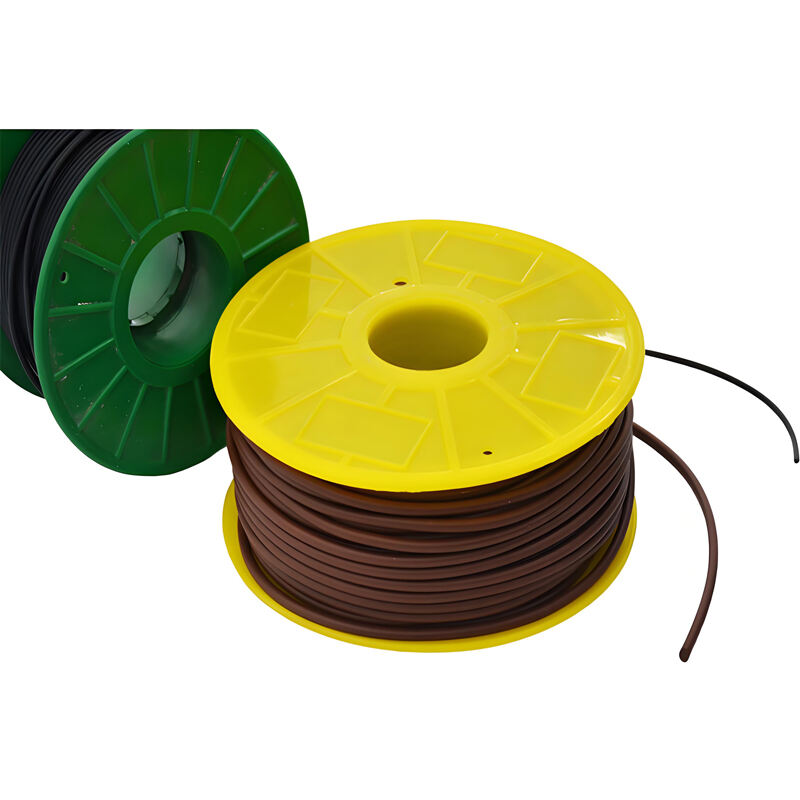
O-Ring Cord — Flexible sealing solutions at competitive prices — Source: nqksfoilseals.com
The price of any sealing component reflects three primary cost drivers: raw material, manufacturing complexity, and quality assurance overhead. Raw material cost varies significantly between elastomer compounds — a standard NBR rubber oil seal is considerably cheaper to produce than an equivalent FKM (Viton) seal, simply because fluorocarbon rubber commands a much higher raw material cost. Manufacturing complexity is driven by seal geometry — a simple O ring or sealing ring is less complex to produce than a multi-lip TC oil seal with a pressed steel case and garter spring.
A seal priced 30% below the market average is worth examining carefully. The cost reduction must come from somewhere — typically the compound quality, dimensional tolerances, or inspection rigour. A substandard shaft oil seal that fails at 40% of its rated lifespan is not 30% cheaper than a quality seal — it is 150% more expensive when you account for the additional replacement cycle. For vehicle applications, a defective auto oil seal may void warranties or, worse, create a safety hazard.
Total Cost FormulaTotal seal cost = (unit price × replacement frequency) + (downtime hours × hourly cost) + consequential damage risk. Always calculate all three components before making a sourcing decision.
Credible oil seal manufacturers investing in in-house compounding, precision tooling, and 100% dimensional inspection carry higher overheads than trading companies sourcing from unverified factories. That overhead is the price of reliability. An ISO-certified oil seal factory with 30+ years of production history and documented quality processes is selling you more than a rubber component — it is selling you confidence that the seal will perform as specified, every time.
The smartest approach to oil seal procurement is to segment your spend. For non-critical, easily accessible applications, a mid-market source among reputable oil seals suppliers may be entirely appropriate. For critical rotating assemblies, hydraulic systems, or automotive applications where a seal failure has major consequences, invest in verified quality from an established manufacturer. This segmented approach optimises your overall sealing budget without exposing your most important assets to unnecessary risk.
Oil seal price is not the number on the invoice — it is the total cost of ownership over the full maintenance cycle. Calculate that figure correctly and the right supplier choice becomes obvious.
Article 13 of 22